
Which Ivy League Campus Fits You? A Culture-First Guide to All Eight
The eight Ivy League schools get lumped into a single category, but they can feel like eight entirely different places to live. One has no required courses; another has every undergraduate read a shared canon. One sits in the middle of Manhattan; another sits in the New Hampshire woods. This guide skips the rankings and asks a different question: which campus culture would you actually be happy in for four years? The eight are Brown, Columbia, Cornell, Dartmouth, Harvard, Penn, Princeton and Yale.
Because fit is so hard to judge from a brochure, many families add a private campus tour through SchoolScoops to the official visit and ask a current student the questions a group tour won't cover.
Brown University (Providence, RI)
Brown is known for its Open Curriculum: no general education requirements, so students design their own path, and many courses can be taken satisfactory/no credit. Students can also cross-register at the Rhode Island School of Design next door. It suits self-directed students who already know how to set their own priorities; the flip side is that freedom without direction can feel like drift. Providence is a small, walkable city with a real food and arts scene. Start with Brown admissions.
Columbia University (New York, NY)
Columbia is the opposite of Brown on curriculum: Columbia College students share a Core Curriculum of foundational courses, which gives the class a common intellectual vocabulary. The campus sits in Morningside Heights, and the city is the rest of your campus: internships, museums, restaurants and subways are part of daily life. The trade-offs are a smaller physical footprint than most Ivies, New York's pace and New York's costs. See Columbia undergraduate admissions.
Cornell University (Ithaca, NY)
Cornell is the largest of the Ivies by undergraduate enrollment, and it's a land-grant school with several distinct undergraduate colleges, from engineering to agriculture to hotel administration, each with its own culture. That breadth is the draw: it feels less like a single tight-knit college and more like a university with many neighborhoods. Ithaca is remote, the winters are long, and the campus is hilly, with gorges running through it. See Cornell admissions.
Dartmouth College (Hanover, NH)
Dartmouth has one of the smallest undergraduate populations in the Ivy League and a distinctive year-round quarter calendar, the D-Plan, in which students choose which terms to be on campus (including a required summer). The Dartmouth Outing Club anchors an outdoors-heavy culture, and Greek life is a real part of the social scene. Hanover is a small New England town, which makes the campus a tight-knit world and also, for some students, a small one. See Dartmouth admissions.
Harvard University (Cambridge, MA)
Harvard's first-years live in and around Harvard Yard, and upperclass students move into one of the residential Houses, which become the center of social life. Majors are called concentrations, and the university's size and resources are enormous. The honest trade-off is that Harvard's scale and brand mean you have to seek out your community rather than expecting it to be handed to you. Cambridge and Boston give you a big college-town-and-city combination. See Harvard College admissions.
University of Pennsylvania (Philadelphia, PA)
Penn is the pre-professional Ivy: four undergraduate schools (the College of Arts and Sciences, Wharton, Engineering and Applied Science, and Nursing) with students who can take classes across them. The campus is urban, part of Philadelphia's University City neighborhood, and career-focused energy runs through it. For students who like that drive it's a strength; for others, the pre-professional intensity can feel like a lot. See Penn admissions.
Princeton University (Princeton, NJ)
Princeton is undergraduate-focused: it has no medical, law or business school, so undergraduates are the center of the university. Independent work, culminating in a senior thesis or project, is a defining part of the academic experience, and eating clubs, rather than fraternity houses, anchor upperclass social life. Princeton is a small town and the campus is a bit of a bubble, which some students find cozy and others find confining. See Princeton admissions.
Yale University (New Haven, CT)
Yale's 14 residential colleges anchor both social and academic life; students are assigned to one before they arrive and stay affiliated with it for four years, so you effectively join a smaller community inside the larger university. Yale is known for its arts culture, including a large a cappella scene, and for its "shopping period," when students sample classes for the first two weeks before committing. New Haven is a real city with grit and character, and the campus and city can feel like separate worlds. See Yale admissions.
A Note on Athletics
The Ivies play in a conference of their own and don't award athletic scholarships, so athletics matter to campus life without organizing it the way they do at large public universities. You can explore each school's teams through the Ivy League athletics site.
How to Narrow It Down
- Want maximum academic freedom: Brown's Open Curriculum is the most flexible on this list.
- Want a shared intellectual foundation: Columbia's Core is the clearest example.
- Want the city as your campus: Columbia (New York) and Penn (Philadelphia) are the most urban.
- Want a small-town, campus-centered experience: Dartmouth, Princeton and Cornell are the most remote.
- Want a small community inside a large university: Yale's residential colleges and Harvard's Houses are built for it.
- Want an undergraduate-first university: Princeton's focus on undergraduates is unusually pronounced.
Questions to Ask on Any Ivy Tour
- How does the curriculum structure (open, core or distribution) shape your day-to-day?
- How much of your social life happens on campus, and how much in the surrounding town or city?
- How do students outside Greek life, eating clubs or other dominant groups find community?
- How competitive does the culture feel, and what does that look like in practice?
- How accessible are professors and research opportunities for undergraduates?
- What do you wish you'd known before you enrolled?
Final Thoughts
All eight are exceptional schools, and most students admitted to one would thrive at several. The real question is which day-to-day environment feels like yours: open or structured, urban or remote, sprawling or intimate. Answering that takes more than a brochure and an hour-long group walk. A private campus tour through SchoolScoops puts you in front of someone living the answer.
→ Ready to explore? Browse all available schools on SchoolScoops to get started.
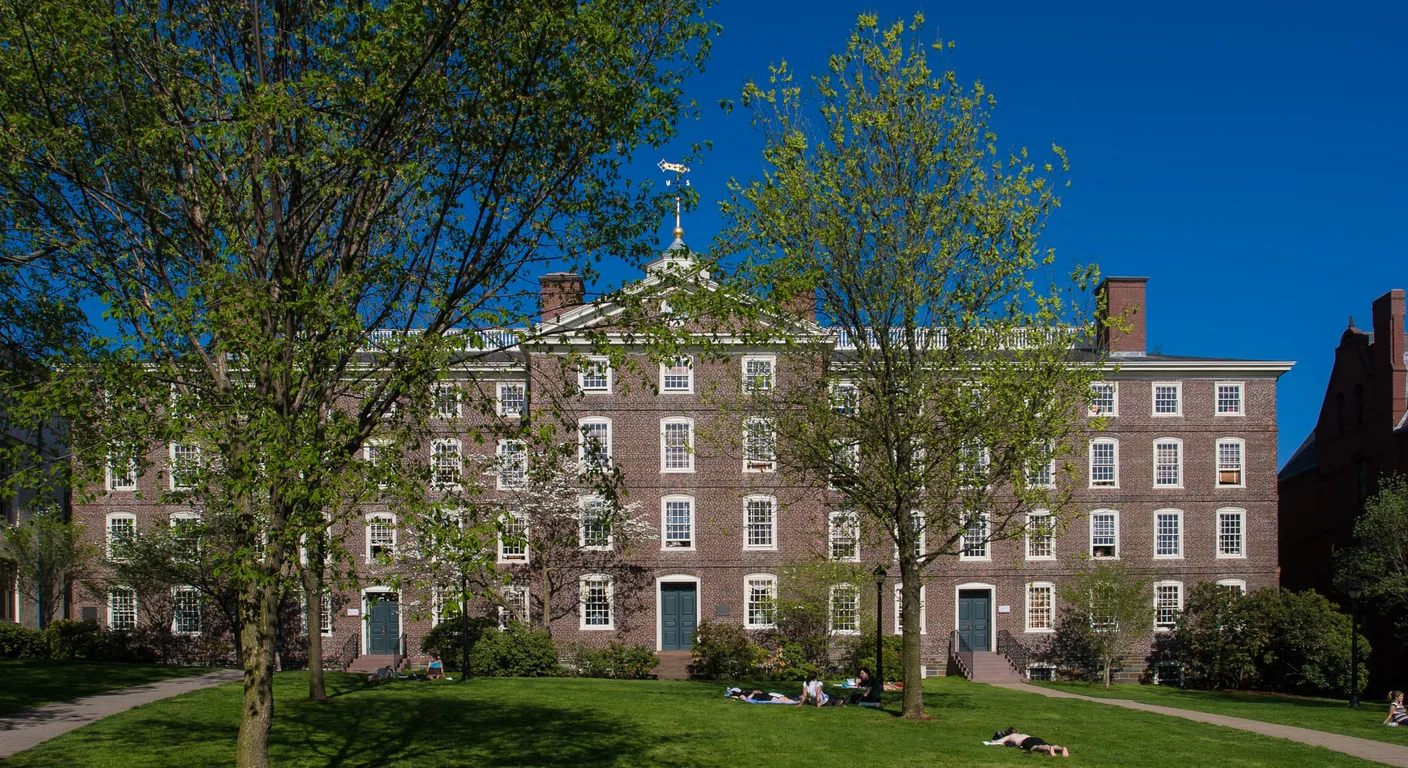
Photo: University Hall at Brown University by Apavlo, licensed under CC BY-SA 3.0. Cropped and resized for this page.