
The Smartest SAT & Essay Advice? Talk to a Student Who Already Got In.
SAT & ACT PREP · COLLEGE ADMISSIONS ADVICE
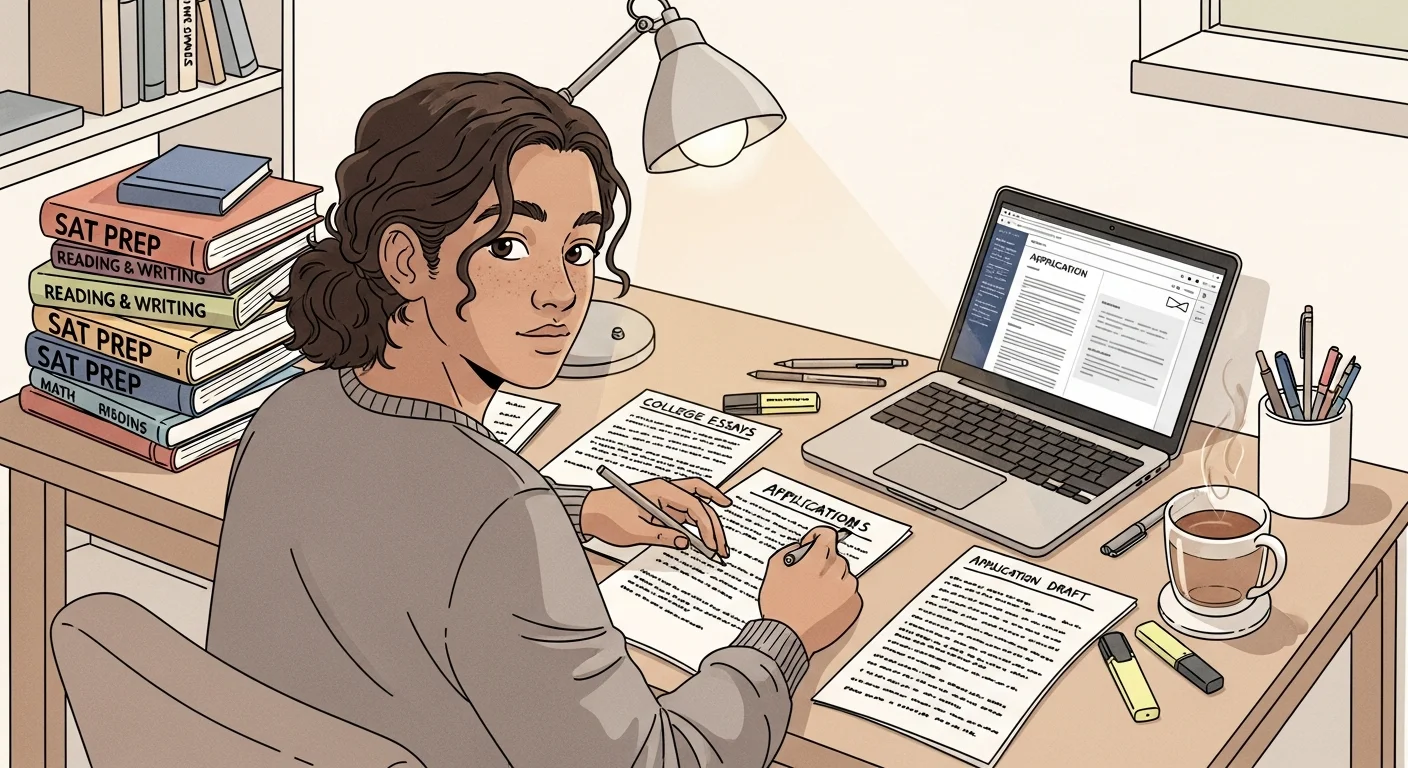
High schoolers spend hundreds of hours on test prep and college essays without ever talking to someone who has actually done it. SchoolScoops changes that — connecting you directly with current college students who can share exactly what worked for them.
If you’re a high school student preparing for college applications, you’ve probably spent time on the usual resources: prep books, YouTube videos, tutoring sessions, and online forums. But there’s one source of SAT, ACT, and college essay advice that most students never tap into — and it’s arguably the most valuable of all: current college students who recently went through exactly what you’re going through, got the scores, wrote the essays, and earned their acceptance letters.
That’s the idea behind SchoolScoops. Known primarily as a platform for private campus tours led by current students, SchoolScoops is also a powerful tool for high schoolers who want real, firsthand college admissions advice — the kind you can’t get from a test prep company or a college brochure. Through one-on-one video chats and in-person meetings with student guides, you can ask the questions that actually matter: What SAT score did you get? What did you write your Common App essay about? What do you wish you’d known before you started applying?
Why Test Scores and Essays Still Matter — More Than Ever
The standardized testing landscape has shifted dramatically in recent years, but scores are far from irrelevant. According to NPR, the 2025–26 application cycle saw a 10% increase in students voluntarily submitting SAT and ACT scores compared to the prior year — even at test-optional schools. Major universities including Dartmouth, Stanford, Princeton, MIT, and Yale have reinstated standardized testing requirements, signaling a clear trend back toward test-required admissions.
At the same time, U.S. News & World Report notes that more than 2,000 four-year colleges remain test-optional or test-blind for fall 2026. This creates a complicated landscape for high school students trying to figure out their strategy: Do you need to take the SAT or ACT? Should you submit your scores? How high do you actually need to score?
And then there’s the college essay. A strong personal statement can be the difference between acceptance and rejection when two applicants have nearly identical academic profiles. The College Board’s BigFuture guide emphasizes that the essay is one of the most important opportunities students have to show who they are beyond grades and scores — and one of the most commonly mishandled parts of the application.
Here’s the problem: most students try to figure all of this out alone, or with the help of a school counselor who is managing hundreds of other students. What they really need is a conversation with someone who just did it successfully — and that’s exactly what SchoolScoops provides.
What SchoolScoops Is — and Why It’s Different
Most people discover SchoolScoops through its private college campus tour offering — the ability to book a one-on-one tour of a college campus with a current student who actually goes there, instead of sitting through a scripted admissions group tour. And that experience alone is transformative.
But SchoolScoops’ platform goes well beyond walking around campus. You can also book video chats with current students — which means you don’t even need to travel to get access to the insight you need. These conversations are unscripted, honest, and tailored entirely to what you want to know.
For high school students preparing for college applications, that means you can connect with a current student at your target school and ask them directly about their SAT scores, ACT scores, college essay topics, test prep strategies, and everything else about the admissions process. You’re not getting generic advice from a blog post. You’re getting the specific, real experience of someone who applied to and got into the exact school you’re aiming for.
“The best college admissions advice doesn’t come from a test prep book. It comes from a student who already got in.”
The Questions You Should Be Asking — and Can’t Find Online
Generic test prep advice is everywhere. What’s genuinely hard to find is school-specific, personalized insight from a real student. Here are the kinds of questions high schoolers are asking in SchoolScoops video chats and campus tour conversations:
- What SAT or ACT score did you have when you got in, and do you think it was a deciding factor for your school?
- Did you go test-optional, or did you submit your scores? Would you make the same choice again?
- What did you write your Common App personal statement about? What made it stand out?
- How many supplemental essays did your school require, and which ones were the hardest to write?
- What test prep resources did you actually use — and what was worth your time versus what wasn’t?
- If you could redo your junior year of high school knowing what you know now, what would you do differently?
- What does the admissions process at your school actually look for beyond grades and scores?
These are the questions that no test prep company can answer for you, because they’re specific to your situation and your target schools. A current student at your target university can answer all of them in a single 30-minute conversation.
SAT vs. ACT: A Current Student’s Perspective Is Priceless
One of the most common questions high school students face is whether to take the SAT, the ACT, or both. The ACT’s official guidance explains the structural differences between the two tests — the ACT is more curriculum-aligned and includes a science section, while the SAT has traditionally leaned toward aptitude-style reasoning. Both are accepted equally at virtually every U.S. college and university.
But knowing the structural differences is very different from knowing which test actually felt more natural to a student who’s already been through both. A current student can tell you exactly which test they found more manageable, what their prep timeline looked like, and what resources made the biggest difference. Khan Academy’s free Digital SAT prep is frequently mentioned as one of the most effective free resources — something you’d likely hear from SchoolScoops students at selective schools who used it extensively. But a peer can add context that no platform provides: how long they studied, how many practice tests they took, and what finally made the score click.
And if you’re applying to a school that’s currently test-optional, FairTest maintains the most current list of test-optional and test-free institutions for fall 2026. But again — knowing a school is test-optional is just the beginning of the question. A SchoolScoops student who got in test-optional (or who submitted a strong score) can tell you how much it actually mattered at that specific school.
How SchoolScoops Helps With College Essay Prep
The college essay is one of the most anxiety-inducing parts of the application process — and one of the least well-understood. The 2025–2026 Common App essay prompts are broad by design, which means the challenge isn’t really the prompt itself. It’s figuring out what story to tell, how personal to get, and how to make your essay stand out among thousands of submissions.
This is where talking to a current college student through SchoolScoops is uniquely valuable. They’ve already written the essays. They know what worked. And unlike a college counselor reading your draft from a distance, they can tell you exactly what they wrote about, why they chose that topic, and what they think the admissions committee responded to.
Here’s what you might learn in a SchoolScoops conversation about essays:
- What their actual Common App essay topic was — and whether it was a “big” life event or something smaller and more personal
- How they approached supplemental essays for their specific school — the “Why Us?” essay, short answers, and any unique prompts
- Whether they used a college counselor, an essay coach, or wrote everything themselves
- What feedback they got during the process and what they wish they’d changed
- What topics or approaches they’d recommend avoiding based on what they’ve heard from current classmates
A SchoolScoops conversation won’t write your essay for you — and it shouldn’t. But it can help you find your angle, avoid common mistakes, and walk into the writing process with a clearer sense of direction than you’d get from any generic advice article.
How to Use SchoolScoops for Admissions Prep: A Step-by-Step Guide
Ready to use SchoolScoops as a college admissions prep tool? Here’s how to get the most out of it:
- Step 1: Choose your target schools. Before booking a session, make a list of the schools you’re seriously considering. The more specific you are about your target schools, the more targeted and useful your SchoolScoops conversations will be.
- Step 2: Browse student guides at each school. On SchoolScoops, you can see current students organized by school. Browse their profiles and find someone whose major, background, or interests align with yours — they’ll be the most relevant source of advice.
- Step 3: Book a video chat or campus tour. You can meet virtually via video chat or in person on campus. For admissions advice conversations, a video chat is often the fastest and most convenient option, especially if you’re in an earlier stage of your search.
- Step 4: Come prepared with specific questions. Write out your questions in advance. The more specific you are, the better. "What was your SAT score?" is good. "You got into a school with a 1480–1560 middle 50% range — where did your score fall and did you submit it?" is even better.
- Step 5: Take notes and follow up. After your session, write down everything useful. If a student recommends a specific test prep strategy or essay angle, note exactly what they said so you can act on it.
What a Good SAT Score Actually Looks Like — According to Real Students
One of the most common sources of confusion for high school students is understanding what score they actually need. U.S. News’ guide on SAT scores recommends looking at the “middle 50%” range for each school — the scores between the 25th and 75th percentile for admitted students. The national average SAT score for the class of 2025 was 1029, but at selective schools, competitive applicants typically score well above 1400.
But here’s what the statistics can’t tell you: how a specific student at a specific school felt about their score going in, whether they submitted it test-optional or not, and whether their score was a strength or a neutral factor in their application. A SchoolScoops student guide can give you that context in a 30-minute conversation.
They can also tell you about superscoring — where a school takes your best section scores across multiple test dates — and how it affected their strategy. They can tell you whether they retook the test multiple times and whether it was worth it. They can tell you about the intersection of test scores and financial aid , which is a conversation most families don’t have early enough.
SchoolScoops vs. Traditional College Prep Resources
There’s no shortage of college prep resources. Khan Academy’s free Digital SAT prep is genuinely excellent for improving your score. The College Board’s BigFuture platform offers solid essay guidance. Your school counselor can help you navigate deadlines and requirements. These are all valuable tools — and SchoolScoops isn’t a replacement for any of them.
What SchoolScoops adds is the one thing none of those resources can provide: a real, unscripted conversation with someone who was in your exact position 12–24 months ago and successfully navigated the process at the school you’re aiming for.
The difference is the difference between reading a review and talking to a friend. One gives you information. The other gives you perspective, context, and the kind of honest insight that only comes from lived experience.
→ Ready to talk to a current student about SAT scores, essays, and admissions? Visit schoolscoops.com or see which schools are available to get started.
Frequently Asked Questions
Can I ask a SchoolScoops student guide about their specific SAT or ACT score?
Yes. SchoolScoops video chats and campus tours are unscripted, and student guides are encouraged to be honest and open. Most are happy to share their scores, test prep strategies, and admissions timeline. The conversation is entirely guided by what you want to know.
What if I’m applying to a test-optional school — is this still useful?
Absolutely. A student at a test-optional school can tell you whether they submitted scores, how the decision felt, and what they think the admissions team weighted most heavily. That first-person perspective is far more useful than a general policy statement on the school's website. You can also check FairTest’s current list of test-optional schools as a starting point.
Can SchoolScoops help me with my college essay?
SchoolScoops isn’t an essay editing service, but a video chat with a current student is one of the best ways to get unstuck on your essay topic, understand what kinds of stories resonate with a school’s admissions culture, and hear honestly what worked and what didn’t from someone who just went through it. For official essay prompt guidance, the 2025–2026 Common App prompts are publicly available and a great starting point.
Is SchoolScoops only for students who are already deciding between schools?
Not at all. High school juniors and even sophomores use SchoolScoops to explore what college life looks like at different schools and to start gathering admissions intel early. The earlier you have these conversations, the more time you have to adjust your test prep strategy, choose your essay topic thoughtfully, and approach your senior year with a clear plan. Learn more about how SchoolScoops works on the platform.
What other topics can I discuss during a SchoolScoops session?
Anything you want to know about college life — academics, dorms, social scene, Greek life, career prep, dining, mental health resources, what to pack, and more. SchoolScoops sessions are your time to ask everything you can’t find in a brochure. Browse available student guides by school to find the right match for your questions.
© 2026 SchoolScoops | schoolscoops.com | Real College Advice from Current Students