
Rutgers vs. Pitt: How Two Big Public Research Universities Really Compare
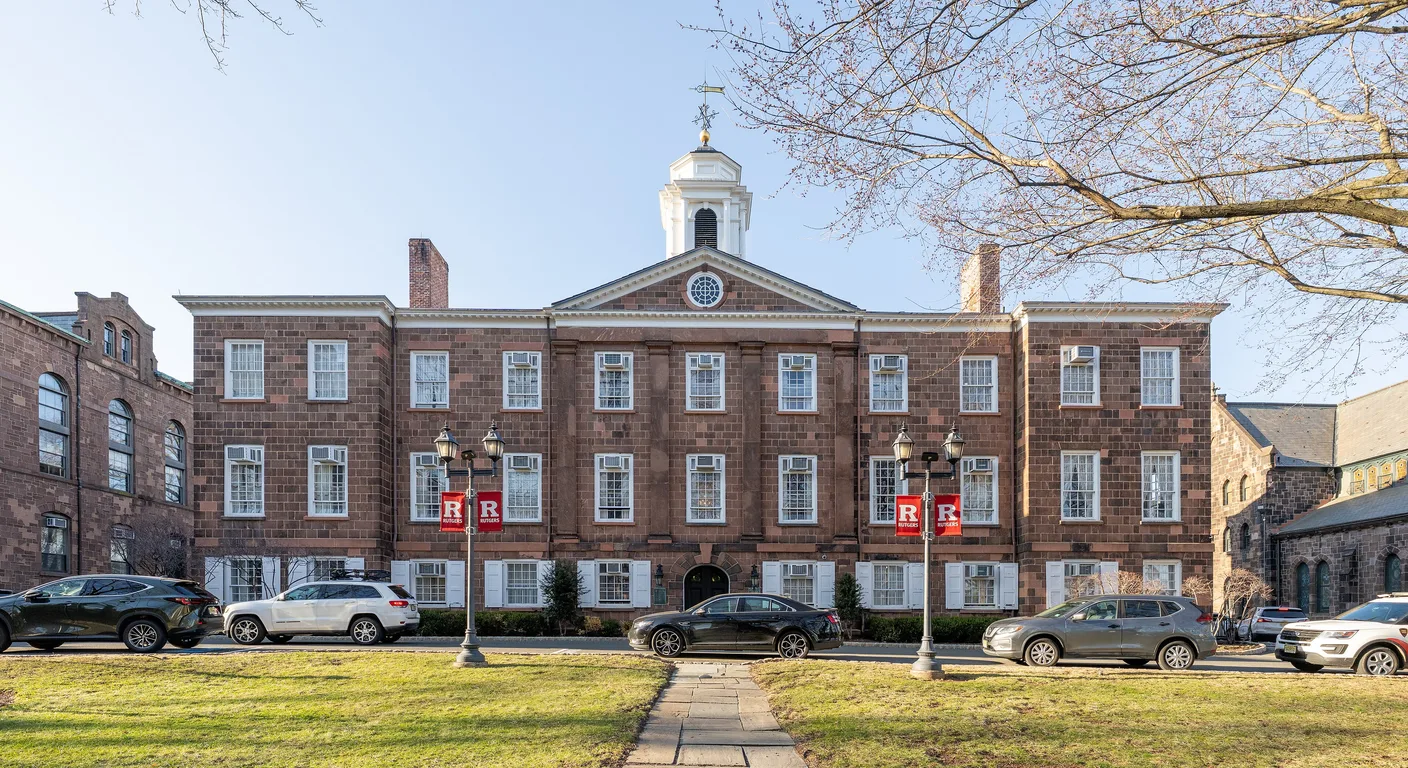
Rutgers and Pitt land on the same shortlist for a specific kind of student: someone who wants a large public research university, Power Four athletics, a real city within reach, and a price that doesn't require a private-school aid appeal. They also tend to land on the same shortlist for the same families, usually in New Jersey, Pennsylvania, New York and the wider mid-Atlantic, which is why the comparison comes up so often. Rutgers–New Brunswick is New Jersey's flagship, spread across five campuses in Central Jersey. The University of Pittsburgh is a state-related research university packed into one dense urban neighborhood in Oakland.
Below is a straight comparison built on each school's own published data, followed by the differences you notice once you're standing on each campus. If you'd rather hear it from a current student at each school, a private campus tour through SchoolScoops is the quickest way to feel the difference. You can also plan official visits through Rutgers undergraduate admissions and Pitt admissions.
The Numbers Side by Side
Every figure below comes from each university's own Common Data Set, the standardized report schools publish about themselves: Rutgers–New Brunswick's 2023–24 edition, and Pitt's 2023–24 and 2025–26 editions. Where both schools published the same year, we used Fall 2023. Where a figure only exists for a newer year, the table says so.
| Rutgers–New Brunswick | Pitt (Pittsburgh campus) | |
|---|---|---|
| Undergraduate enrollment | 36,588 (Fall 2023) | 21,388 (Fall 2025) |
| First-year applicants, Fall 2023 | 43,347 | 58,416 |
| Applicants admitted, Fall 2023 | 28,326 (65%) | 29,034 (50%) |
| Six-year graduation rate | 85.0% (2017 cohort) | 85.8% (2019 cohort) |
| First-year retention | 93% (Fall 2022 cohort) | 92.5% (Fall 2024 cohort) |
| First-years in university housing | 75% (Fall 2023) | 95% (Fall 2025) |
| 2024–25 in-state tuition and required fees | About $17,900 | About $21,900 |
| 2024–25 out-of-state tuition and required fees | About $37,400 | About $41,400 |
| Athletic conference | Big Ten | ACC |
Two things worth knowing. Admit rates move: Pitt's climbed from 50% in Fall 2023 to 59% in Fall 2025 (38,477 admitted out of 64,724 applicants), so treat any single-year number as a snapshot. And third-party sites list wildly different Rutgers admit rates (we saw figures anywhere from the low 40s to the mid 60s), so the 65% here comes from Rutgers' own report. Rutgers' cost figures come from its Common Data Set; Pitt's are federal college-cost data, so confirm current-year rates on Pitt's tuition page before you budget.
Campus and Setting: Five Campuses vs. One Neighborhood
Rutgers–New Brunswick is really five campuses stitched together by buses: College Avenue (the historic core around Old Queens), Busch, Livingston, Cook and Douglass. Where you live and where your class is can be a bus ride apart, and the bus schedule quietly becomes part of your day. The trade is variety. College Avenue has the energy of the city of New Brunswick, Cook and Douglass feel quieter and greener, and the New Brunswick train station puts New York City about an hour away by NJ Transit. Housing runs through Rutgers Residence Life.
Pitt is the opposite: a single compact urban campus in Oakland, anchored by the 42-story Cathedral of Learning, with the Carnegie museums, Schenley Park and Carnegie Mellon a short walk away, and the UPMC hospitals in the same neighborhood. It's hilly, it gets cold and gray, and you can do most of a day on foot. The trade is that it's more urban and less traditional-quad than Rutgers' greener corners. Housing assignments go through Panther Central.
Academics: Where the Degrees Actually Go
Rutgers' degree mix skews toward business. In 2022–23, business and marketing made up about 20.5% of bachelor's degrees awarded in New Brunswick, followed by computer and information sciences (11.5%) and engineering (11.1%). Undergraduates are spread across professional schools, including Rutgers Business School and the School of Engineering, plus Arts and Sciences, the Mason Gross School of the Arts and the Ernest Mario School of Pharmacy. Rutgers also reports class sizes: in Fall 2023, about 40% of undergraduate class sections had fewer than 20 students, and about 7% had 100 or more. For pre-med students, its Common Data Set lists an eight-year bachelor/medical dual-degree program with Robert Wood Johnson Medical School, which is based in New Brunswick.
Pitt's mix is more evenly spread. In 2024–25, business made up about 12.5% of bachelor's degrees, followed by biology (11.8%), psychology (10.9%), engineering (10.5%), health professions (10.2%) and computer science (9.6%). Business is through Pitt's business programs and engineering through the Swanson School of Engineering. The health-sciences strength is real: Pitt's schools of medicine, nursing, dental medicine, pharmacy and public health all sit in the Oakland neighborhood, which matters for pre-health students looking for research and clinical exposure. One caveat: Pitt's 2025–26 Common Data Set doesn't report class sizes or a student-faculty ratio, so we can't compare those directly. Ask on tour.
Honors Colleges: Small Communities Inside Big Schools
Rutgers' Honors College invites about 500 students a year, according to its Common Data Set, drawing from across the liberal arts and professional schools. Pitt's Honors College is the counterpart on the Pittsburgh side. At both schools, the useful questions are practical ones: does honors change your housing, your access to classes, your advising? The label matters less than what it gets you on an ordinary Tuesday.
Game Day and Campus Energy
Rutgers competes in the Big Ten, which it joined in 2014; Pitt competes in the ACC, which it joined in 2013. Rutgers plays football at SHI Stadium on the Busch campus, so game day happens on campus. Pitt football plays at Acrisure Stadium on the North Shore, shared with the Steelers, so game day means leaving campus, while Pitt basketball plays at the on-campus Petersen Events Center. Football matters at both schools, but in our experience neither one reorganizes its calendar around it the way the biggest football universities do. More at Scarlet Knights athletics and Pitt Panthers athletics.
What It Costs
On tuition and required fees alone, Rutgers came in about $4,000 a year below Pitt in 2024–25 for both in-state and out-of-state students. Rutgers also lists two New Jersey last-dollar programs in its Common Data Set: the Scarlet Guarantee for first- and second-year students and the state's Garden State Guarantee for third- and fourth-year students, both covering tuition and mandatory fees after other grants. Pitt is state-related rather than fully state-run, and Pennsylvania residents pay a different rate than out-of-state students, so check which category you fall into. Sticker price is only a starting point; run both schools' net price calculators before you decide.
Where They Diverge Most
- Scale: Rutgers–New Brunswick enrolls roughly 15,000 more undergraduates than Pitt's Pittsburgh campus (36,588 in Fall 2023 vs. 21,388 in Fall 2025).
- Geography: five bus-connected campuses in Central Jersey vs. one walkable, hilly, urban neighborhood.
- Application timeline: Rutgers has a November 1 early action deadline and a December 1 regular deadline; Pitt admits on a rolling basis and offers neither early decision nor early action.
- Selectivity: Pitt admitted 50% of applicants in Fall 2023 vs. Rutgers' 65%, though Pitt's rate had risen to 59% by Fall 2025.
- Where students live: 75% of Rutgers–New Brunswick first-years lived in university housing in Fall 2023 vs. 95% of Pitt's in Fall 2025. Across all undergraduates, it was 41% at Rutgers and 44% at Pitt.
- Majors: Rutgers is business-heavy (about one in five degrees); Pitt spreads more evenly across business, biology, psychology, engineering and health.
- Residency: about 84% of Rutgers' Fall 2023 first-year class were New Jersey residents (6,479 of 7,681), which shapes who your classmates are.
Questions Worth Asking on Each Campus
- How much of your week goes to buses at Rutgers, or to hills and weather at Pitt, and does it bother you?
- What did class size look like in your intended major during your first two years?
- How hard is it to get into the classes you want, or to switch into business, engineering or nursing?
- Where do students live after freshman year, and how do they find off-campus housing?
- What does the honors college actually change in your daily routine?
- How do internships happen from here: New York-area recruiting out of New Brunswick, or Pittsburgh's employers out of Oakland?
Final Thoughts
Rutgers is the larger, more spread-out school with a business-heavy profile, an early action calendar and a lower sticker price. Pitt is the denser, more urban campus with more evenly spread majors and a rolling admissions process. Neither is objectively better, and the deciding factor is usually whether a student feels at home in a five-campus sprawl or a single urban neighborhood. That's a feel question, and the fastest way to answer it is to walk both. A private tour with a current student at each, Rutgers and Pitt, is one way to do it.
→ Ready to explore? Browse all available schools on SchoolScoops to get started.
Photo: Old Queens at Rutgers University by ajay_suresh, licensed under CC BY 4.0. Cropped and resized for this page.