
Notre Dame vs. USC: How Two Legendary Football Rivals Actually Compare as Colleges
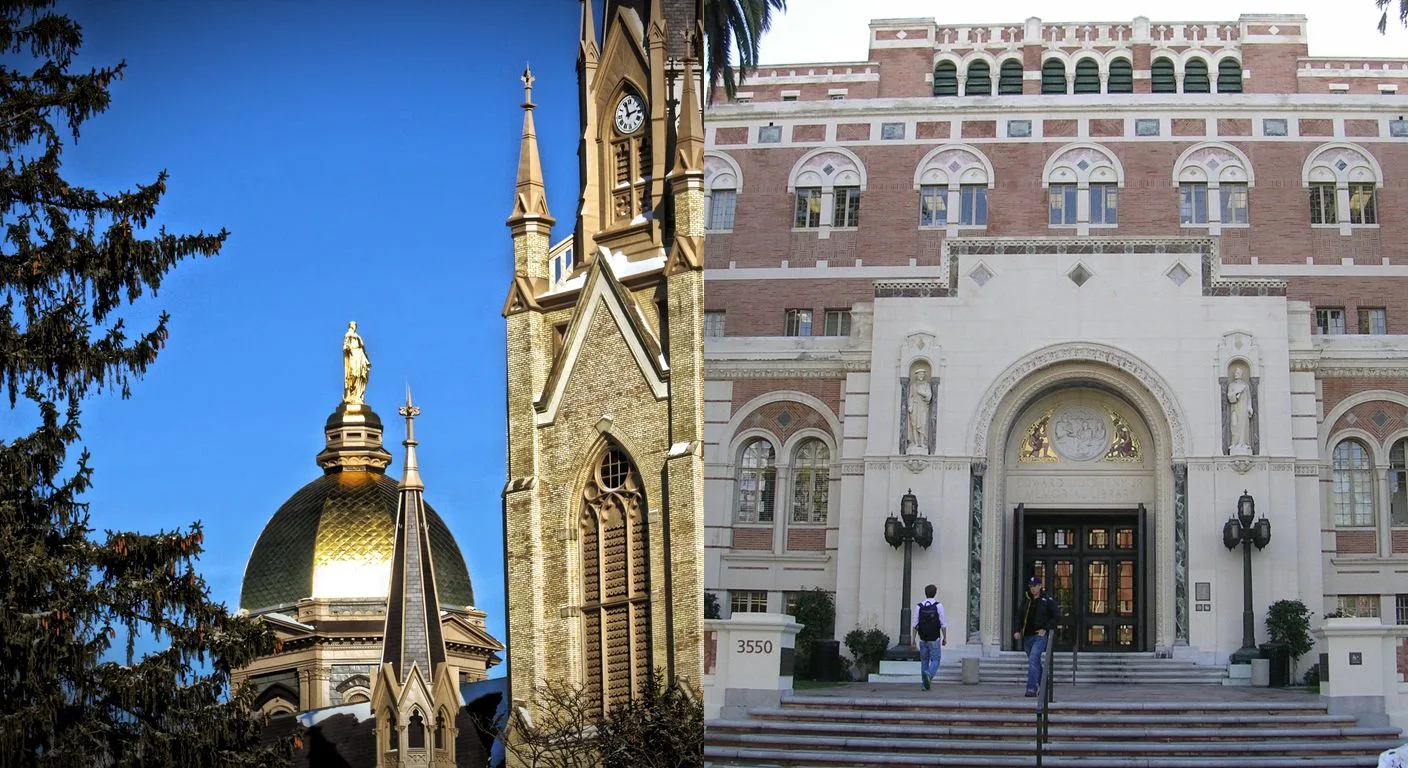
Notre Dame and USC get lumped together constantly — both are elite private universities with legendary football programs, national brand recognition, and enough cross-admits that a lot of students end up choosing between them directly. But once you get past the shared reputation for winning on Saturdays, they're built almost nothing alike. Notre Dame is a small, deeply residential Catholic university on a self-contained campus in rural Indiana. USC is a sprawling research university woven into Los Angeles, with a social structure and a surrounding city that couldn't be more different. Here's an honest look at what actually separates them, from the numbers to the day-to-day culture — plus where a current student's perspective, which you can get through a private tour with SchoolScoops, fills in what neither school's admissions office will tell you outright.
By the Numbers
Notre Dame enrolls roughly 8,900 undergraduates on a 1,265-acre campus, admits around 9 to 11 percent of applicants, and charges approximately $67,600 in tuition and fees. USC enrolls roughly 20,600 undergraduates — more than double Notre Dame's size — on a 226-acre campus, admits around 10 percent of applicants, and charges approximately $68,200 in tuition and fees. Both schools meet 100 percent of demonstrated financial need for admitted students and post four-year graduation rates in the high 80s to low 90s. The admissions numbers are nearly identical. The size of the student body, and the amount of physical campus each student has to share it on, are not.
Setting: A Self-Contained World vs. a City Campus
Notre Dame's campus in South Bend, Indiana is built to feel like its own world — the Golden Dome, the Grotto, and Notre Dame Stadium sit inside a landscape with real seasons and almost no competition for students' attention from the outside. USC's University Park campus sits just south of downtown Los Angeles, fully integrated into a global city, which means immediate access to the entertainment industry, tech, and one of the largest alumni networks in the country — but also a campus that has to actively compete with the city around it for students' time and identity. If you want a college experience that's insulated and tight-knit, Notre Dame's setting does that by design. If you want a college experience that plugs directly into a major industry and city from day one, USC's setting does that instead.
Business Schools: Mendoza vs. Marshall
Notre Dame's Mendoza College of Business is known for a values-driven culture and strong placement into consulting, finance, and accounting, helped along by an alumni network that recruits its own with unusual loyalty. USC's Marshall School of Business leans into its Los Angeles location, with strong ties to entertainment, media, and entrepreneurship layered on top of traditional finance and consulting placement. Neither program is objectively stronger — they're optimized for different industries, and which one serves you better depends heavily on where you want to end up working.
Social Structure: No Greek Life vs. Greek Life as the Default
This is the single biggest lived-experience difference between the two schools. Notre Dame has no fraternities or sororities at all; instead, its residence-hall system functions as the primary social structure — students identify with their dorm almost like a house system, and that identity often outlasts graduation. USC's campus housing is standard for underclassmen, but Greek life is a defining feature of the social scene, and upperclassmen frequently move into off-campus apartments around University Park and West Adams, plugging into the broader Los Angeles social world rather than staying inside a campus-centered community. A student who thrives on structure and built-in community will likely feel more at home at Notre Dame; a student who wants more independence and a self-directed social life will likely feel more at home at USC.
Athletics & Football Culture
Notre Dame football is an independent program with its own national broadcast deal and a century of tradition, even though the university competes in the ACC for most other sports — which makes football something closer to a campus-wide institution than just another varsity sport. USC's Trojan athletics now compete in the Big Ten following recent conference realignment, with the Coliseum anchoring one of the most storied programs in college football history. Both schools' football cultures are genuinely central to campus identity — but Notre Dame's independence and South Bend's lack of competing distractions make gamedays feel almost civic, while USC's football culture shares the spotlight with a much larger, more spread-out student experience.
Where They Diverge Most
- Notre Dame has no Greek life; it's a defining part of USC's social scene
- USC's undergraduate population is more than double Notre Dame's
- Notre Dame's residence-hall system is the primary social structure; USC students increasingly move off campus after freshman year
- South Bend is an insulated, four-season college town; Los Angeles is a sprawling global city students have to learn to navigate
- Mendoza's alumni network skews toward finance, consulting, and accounting; Marshall's skews toward entertainment, media, and entrepreneurship alongside traditional business
- Notre Dame football is an independent program with its own broadcast deal; USC football now competes in the Big Ten
Questions Worth Asking Before You Decide
- Do you want a campus that's the center of your social world, or a campus that's a base for exploring a major city?
- Does the absence of Greek life at Notre Dame sound like a relief or a drawback for how you want to make friends?
- Which industry are you actually aiming for — does Mendoza's finance-and-consulting network or Marshall's entertainment-and-media network fit better?
- Can you picture yourself thriving in a small, tradition-heavy Midwestern community, or do you need the scale and anonymity of a 20,000-student campus in a major city?
Both schools will hand you a strong degree and a loyal alumni network. The honest answer to which one is right for you has less to do with rankings and more to do with whether you want South Bend's tight-knit, four-season community or Los Angeles's sprawl and access. A private, student-led tour through SchoolScoops at Notre Dame or USC is a good way to test that gut feeling against what a current student actually experiences day to day.
→ Ready to explore? Browse all available schools on SchoolScoops to get started.
Photo credits: Left, University of Notre Dame Golden Dome by Michael Fernandes; right, Doheny Library by Padsquad19. Both source photos are licensed under CC BY-SA 3.0. The side-by-side composite is cropped and resized for this page and licensed under CC BY-SA 3.0.