
Co-op City: What to Really Expect from a Private Campus Tour at Northeastern
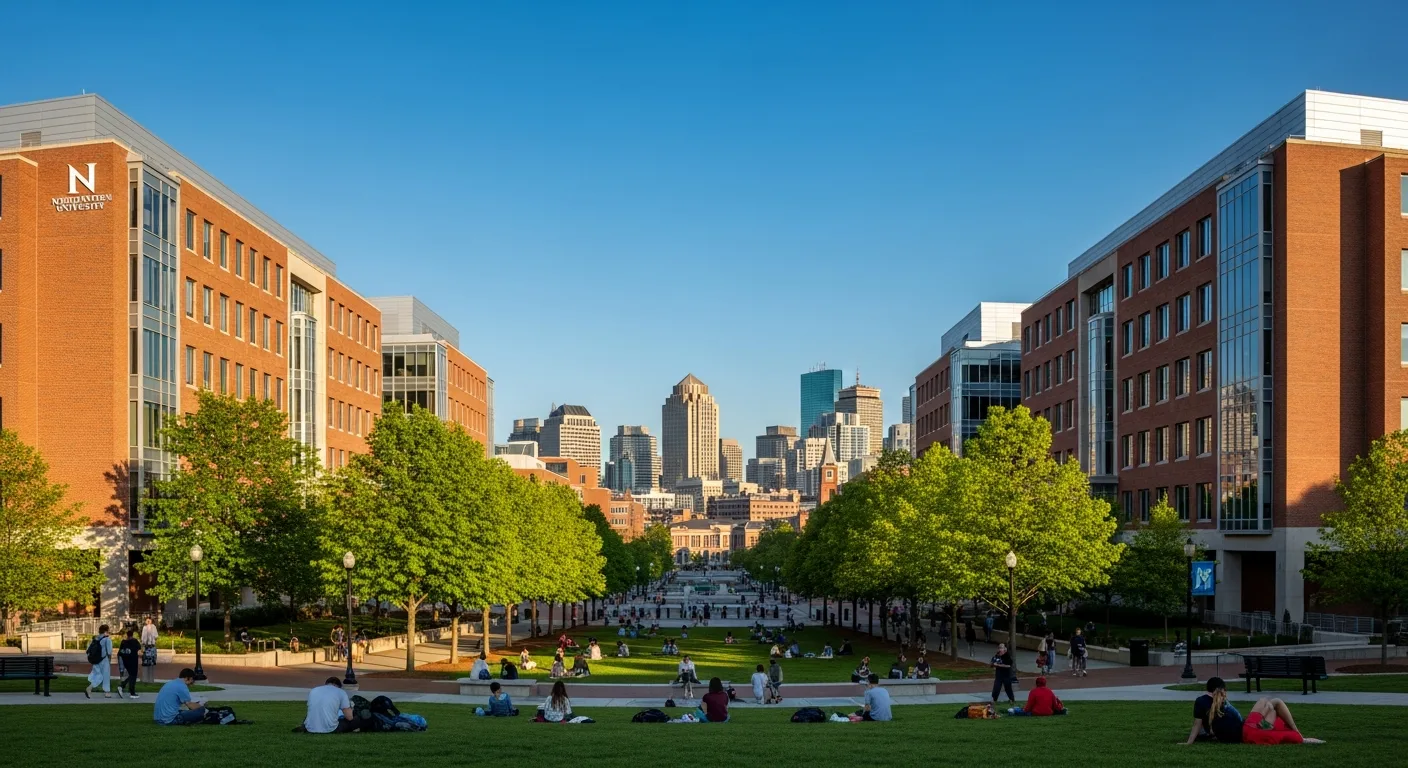
If there's one feature that defines Northeastern University more than anything else, it's the co-op program — a structure that sends most undergraduates out for six-month, full-time, paid work placements at real companies, often more than once before graduation. That single design choice changes almost everything about the Northeastern experience: timelines stretch out, friend groups scatter and reconvene across different semesters, and students graduate with a resume that looks more like a young professional's than a typical college senior's. A standard tour walks you past Centennial Common and mentions co-op briefly. A private Northeastern campus tour through SchoolScoops gets you a current Husky who can actually explain what co-op does to your college experience, for better and for more complicated.
If you're researching Northeastern campus tours, looking for a student-led tour of Northeastern in Boston, or trying to understand whether the co-op model fits how you want to spend your college years, this guide — and a real conversation with a current student — will get you further than any info session. You can also explore official visit options through the Northeastern admissions visit page and review program details on the Northeastern homepage.
What the Info Session Doesn't Cover
Northeastern's admissions events do a good job explaining co-op in theory, but understanding what it actually feels like to leave campus for six months, return, and rebuild your social rhythm — sometimes more than once — takes a real conversation. A private SchoolScoops tour gets into specifics like:
- How co-op placements actually get assigned, how competitive the best ones are, and what backup options exist if your first choice doesn't come through
- What it's like socially to have your cohort scatter across different co-op timelines, and how students rebuild friend groups each time they return to campus
- How the five-year graduation timeline that often comes with multiple co-ops affects financial planning, housing, and overall college pacing
- What the D'Amore-McKim School of Business adds on top of co-op for students chasing finance, consulting, or entrepreneurship paths
- How Boston as a college city — dense with other universities, internship opportunities, and things to do — shapes the broader Northeastern experience
- What residential life looks like for students who are frequently leaving campus and returning, rather than staying put for four consecutive years
- What current students wish they'd known about co-op's tradeoffs before committing to the model
Centennial Common and Krentzman Quad
Centennial Common and the surrounding quads function as Northeastern's primary outdoor gathering spaces, busy with students moving between classes, co-op interviews, and the rhythm of a campus embedded in the middle of Boston. A private guide can explain what these spaces mean day to day and how campus life adjusts as students cycle in and out for co-op rotations. Learn more through the Northeastern visit page.
The Co-op Program in Practice
Northeastern's co-op program is the single most distinctive feature of the university, and a current student can explain what the actual mechanics look like — how placements are found, how compensation typically works, and how students juggle the academic calendar with full-time jobs that sometimes take them across the country or overseas. This is the conversation that matters most for understanding whether Northeastern's model fits your goals.
The D'Amore-McKim School of Business
The D'Amore-McKim School of Business integrates tightly with the co-op model, meaning business students often graduate with multiple substantial work experiences already on their resume before they've finished coursework. A current student can explain what the curriculum actually demands and how the co-op-driven recruiting pipeline compares to more traditional business school career services.
Boston as a Campus
Northeastern sits in the middle of Boston, surrounded by other universities, hospitals, and a dense urban environment that gives students constant access to internships, culture, and a genuine city experience without leaving campus. A private guide can explain how students balance the academic intensity with everything Boston has to offer, and how the city's density compares to a more traditional, self-contained college town.
Residential Life and the Co-op Cycle
Because students leave for co-op at different points, Northeastern's residential life doesn't follow the same steady four-year rhythm as most universities — friend groups shift, housing needs change, and the social calendar resets periodically. Your guide can walk you through how the Northeastern housing system works and how students manage the social disruption that comes with the co-op cycle.
Husky Athletics
Northeastern competes in Division I hockey and a range of other sports, and while athletics isn't the dominant cultural force it is at some larger universities, Husky hockey games carry real energy and school pride. A private guide can explain what that athletics culture looks like day to day. Learn more at Northeastern Athletics.
Questions Worth Asking on a Private Northeastern Tour
- How competitive are the best co-op placements, and what happens if your first choice doesn't come through?
- How does the co-op cycle affect your social life and friend groups over four-plus years?
- What does the D'Amore-McKim recruiting pipeline actually look like compared to co-op placements generally?
- How does Northeastern compare to Boston University or Tufts for your intended major?
- What does it cost, financially and socially, to extend your timeline with multiple co-ops?
- What do graduating students say they wish they'd known about the co-op model going in?
For more on booking a SchoolScoops guide matched to your interests, visit how SchoolScoops works.
Why Families Choose SchoolScoops for Northeastern Tours
Northeastern's co-op model is genuinely unlike the standard college experience, and it's nearly impossible to evaluate fully from an admissions presentation alone. Families who book a private Northeastern tour through SchoolScoops consistently say the conversation helped them understand the real tradeoffs — the career advantages of co-op against the social and timeline disruptions it creates — in a way that let them make a far more informed decision.
Final Thoughts on Visiting Northeastern
Northeastern offers something genuinely different from most universities: a structural commitment to real-world work experience built directly into the undergraduate timeline, set inside one of the country's best college cities. Whether you're drawn to the co-op model, D'Amore-McKim, or simply the idea of Boston as your campus, the only way to know if it's right for you is to hear from someone living it. Book a private Northeastern campus tour through SchoolScoops and get real answers from a current Husky.
→ Ready to book? Visit SchoolScoops.com or browse all available schools to find your guide and get started.