
Top of the Class: The 20 Best Undergraduate Business Schools in America — and How to Actually Get Into One
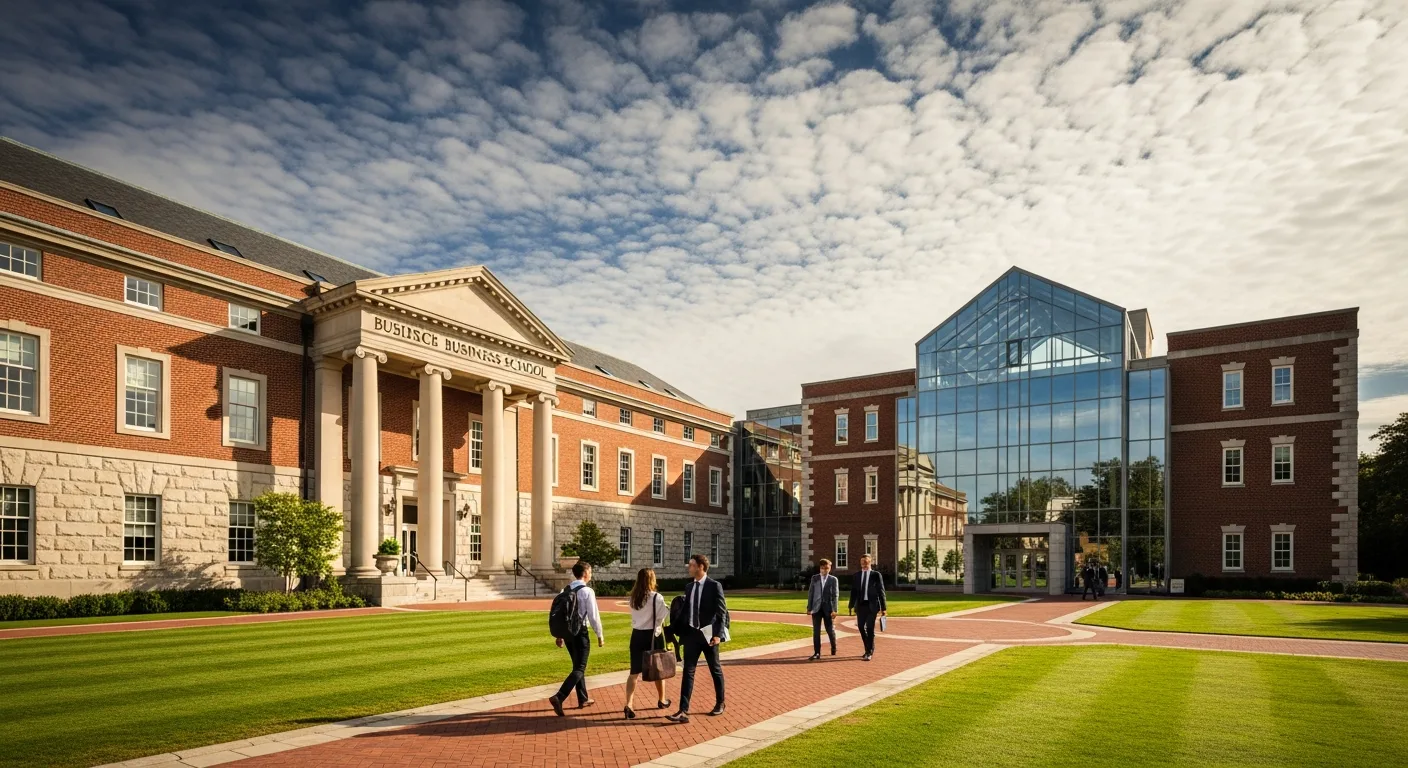
Picking an undergraduate business school is one of the most consequential decisions a college-bound student will make — the program you choose shapes your recruiting pipeline, your peer network, and often your first job offer before you've even graduated. The problem is that most "best business schools" lists are built from survey data and average starting salaries, not from what it's actually like to sit in a Kelley classroom or grind through McCombs recruiting season. That's where SchoolScoops comes in: private, student-led campus tours that connect you with a current business student at the school you're considering, so you can hear the unfiltered version before you commit four years and a lot of tuition to it.
Below is our ranking of the 20 best undergraduate business programs in the country, along with a practical playbook for improving your odds of getting into one. This isn't a brochure — it's the list we'd want if we were choosing a business school ourselves.
Why a Private Tour Matters More for Business School Applicants
Business programs vary enormously in structure, and a general campus tour almost never covers the details that actually determine fit. A private SchoolScoops tour, guided by a current student in the business school itself, gives you insight on:
- Whether the program is a direct-admit business school (like McIntire or Ross) or a competitive internal-transfer model (like McCombs or Haas) — a distinction that changes your entire application strategy
- What the recruiting pipeline actually looks like for investment banking, consulting, and Big Four accounting, and which firms show up on campus
- How large the core business classes really are, and whether professors or graduate TAs teach them
- What the case competition, trading floor, or student-run fund culture feels like day to day
- How competitive and collaborative (or cutthroat) the internal culture is among classmates
- Whether the surrounding city or town offers internship access during the school year, not just over the summer
- What students wish they'd known about course load, GPA competition, and the transition from freshman prerequisites into the business core
The 20 Best Undergraduate Business Schools
-
Wharton School — University of Pennsylvania. Wharton remains the gold standard in undergraduate business education, with a curriculum that lets students concentrate in finance, marketing, real estate, and more inside one of the most resourced business schools in the world. Admission is notoriously competitive and requires a dedicated business-school application within Penn's process.
-
MIT Sloan School of Management. MIT's Course 15 undergraduate business program blends quantitative rigor with the broader MIT engineering culture, producing graduates who are as comfortable building models as they are building products.
-
NYU Stern School of Business. Stern's Manhattan location gives students direct access to Wall Street internships during the semester, not just the summer — a structural advantage almost no other program can match.
-
UC Berkeley Haas School of Business. Haas is a highly selective internal-transfer program known for its "Defining Leadership Principles" culture and deep ties to the Bay Area tech and venture capital scene.
-
University of Michigan Ross School of Business. Ross combines a direct-admit option with one of the strongest alumni networks in business, plus the Multidisciplinary Action Projects program that puts students on real consulting engagements as sophomores.
-
UVA McIntire School of Commerce. McIntire's third-year direct-admit model means students spend two years building a strong GPA before applying, then join a tight-knit, highly ranked commerce cohort.
-
UT Austin McCombs School of Business. McCombs offers both direct admission and internal transfer, with standout programs in finance and management information systems and deep recruiting ties across Texas and beyond.
-
Indiana University Kelley School of Business. Kelley is a direct-admit program with one of the most structured, career-services-driven cultures in business education, and it consistently punches above its general university ranking.
-
UNC Kenan-Flagler Business School. Kenan-Flagler's undergraduate program is a competitive internal-transfer track known for its collaborative culture and strong real estate and consulting placement.
-
Cornell Dyson School (Applied Economics and Management). Housed in Cornell's College of Agriculture and Life Sciences, Dyson offers Ivy League business credentials with a slightly less cutthroat admissions path than Cornell's other colleges.
-
Georgetown McDonough School of Business. McDonough's Washington, D.C. location gives students unmatched access to international business, policy-adjacent finance, and government-affairs recruiting.
-
USC Marshall School of Business. Marshall benefits from USC's enormous Los Angeles alumni network, particularly in entertainment finance, entrepreneurship, and West Coast consulting.
-
Notre Dame Mendoza College of Business. Mendoza is a direct-admit program with one of the most loyal alumni networks in the country and strong placement in accounting, finance, and consulting. Visit options are available through the Notre Dame admissions site.
-
Emory Goizueta Business School. Goizueta's Atlanta location and small cohort size create a close-knit program with strong ties to consulting and the city's growing corporate and healthcare sectors.
-
Boston College Carroll School of Management. Carroll is a direct-admit program known for its finance placement into Boston's asset management industry and a values-driven culture tied to BC's Jesuit identity.
-
Ohio State Fisher College of Business. Fisher offers a large, well-resourced program with standout real estate and logistics specializations and one of the biggest alumni networks of any business school on this list.
-
University of Washington Foster School of Business. Foster is a competitive internal-transfer program with deep connections to Seattle's tech industry, particularly in business analytics and entrepreneurship.
-
Texas A&M Mays Business School. Mays combines a massive, loyal Aggie alumni network with strong energy-sector and consulting recruiting across Texas.
-
University of Wisconsin School of Business. Wisconsin's program is known for its real estate and supply chain management specializations and a Midwest recruiting network that punches well above its national name recognition.
-
Villanova School of Business. Villanova is a direct-admit program with a strong Philadelphia-to-New York finance pipeline and one of the most consistently ranked accounting programs in the country.
How to Boost Your Chances of Getting In
Business school admissions differ from general university admissions in a few important ways, and understanding the mechanics matters as much as the essay itself:
- Know whether you're applying to a direct-admit program (Wharton, McIntire, Ross's direct path, Kelley, Mendoza, Carroll, Villanova) or an internal-transfer program (Haas, McCombs, Kenan-Flagler, Foster) — internal-transfer schools require you to build a competitive GPA in prerequisite courses before you're admitted to the business school itself
- Quantitative coursework matters — strong grades in calculus, statistics, and economics carry real weight in a business application, even more than a generically strong overall GPA
- Demonstrate initiative outside the classroom — a student-run investment club, a small business, DECA or FBLA leadership, or a part-time finance internship signals genuine interest far more than a personal statement alone
- Tailor your essays to the specific program's culture — a McDonough essay about international policy interest and a Marshall essay about entrepreneurship in entertainment should not read the same
- For internal-transfer schools, research the actual GPA cutoff and application timeline for the specific year you'll be applying, since these shift year to year and are rarely publicized clearly on the main admissions site
- Talk to a current student before you apply — a private SchoolScoops tour can tell you exactly what admissions committees at that specific school are actually looking for, which changes program to program far more than most applicants realize
Questions to Ask on a Private Business School Tour
- Is this a direct-admit or internal-transfer program, and what does the actual admission timeline look like?
- What percentage of students land internships in their intended industry by junior year?
- How does the recruiting calendar work, and which firms actually show up on campus versus just posting jobs online?
- How large are the core finance, accounting, and marketing courses, and who teaches them?
- What's the honest difference in culture between this business school and its closest peer on this list?
- What do current students wish they'd known before committing to this specific program?
For more on booking a SchoolScoops guide matched to your intended major, visit how SchoolScoops works.
Why Families Choose SchoolScoops for Business School Tours
Choosing between two similarly ranked business schools often comes down to details that never show up in a ranking — the intensity of the recruiting culture, how collaborative or competitive classmates really are, whether the direct-admit stress is worth avoiding the internal-transfer gamble. Families who book a private SchoolScoops tour consistently say the conversation with a current business student clarified a decision that a spreadsheet of rankings never could.
Business students, more than most, tend to be sharply aware of their program's tradeoffs — they've usually compared notes with friends at three or four of the other schools on this list. That comparative honesty is exactly what a prospective applicant needs.
Final Thoughts on Choosing a Business School
There is no single "best" undergraduate business school — there's a best fit for your intended industry, your learning style, and how you handle competitive academic environments. Whether you're drawn to Wharton's scale, McIntire's tight-knit cohort, or Fisher's Midwest network, the right way to evaluate any of these twenty programs is to hear from a student living the recruiting grind right now. Book a private business school tour through SchoolScoops and get real answers before you apply.
→ Ready to book? Visit SchoolScoops.com or browse all available schools to find your guide and get started.