
The Long White Coat List: Top 10 Undergraduate Schools for Pre-Med Students
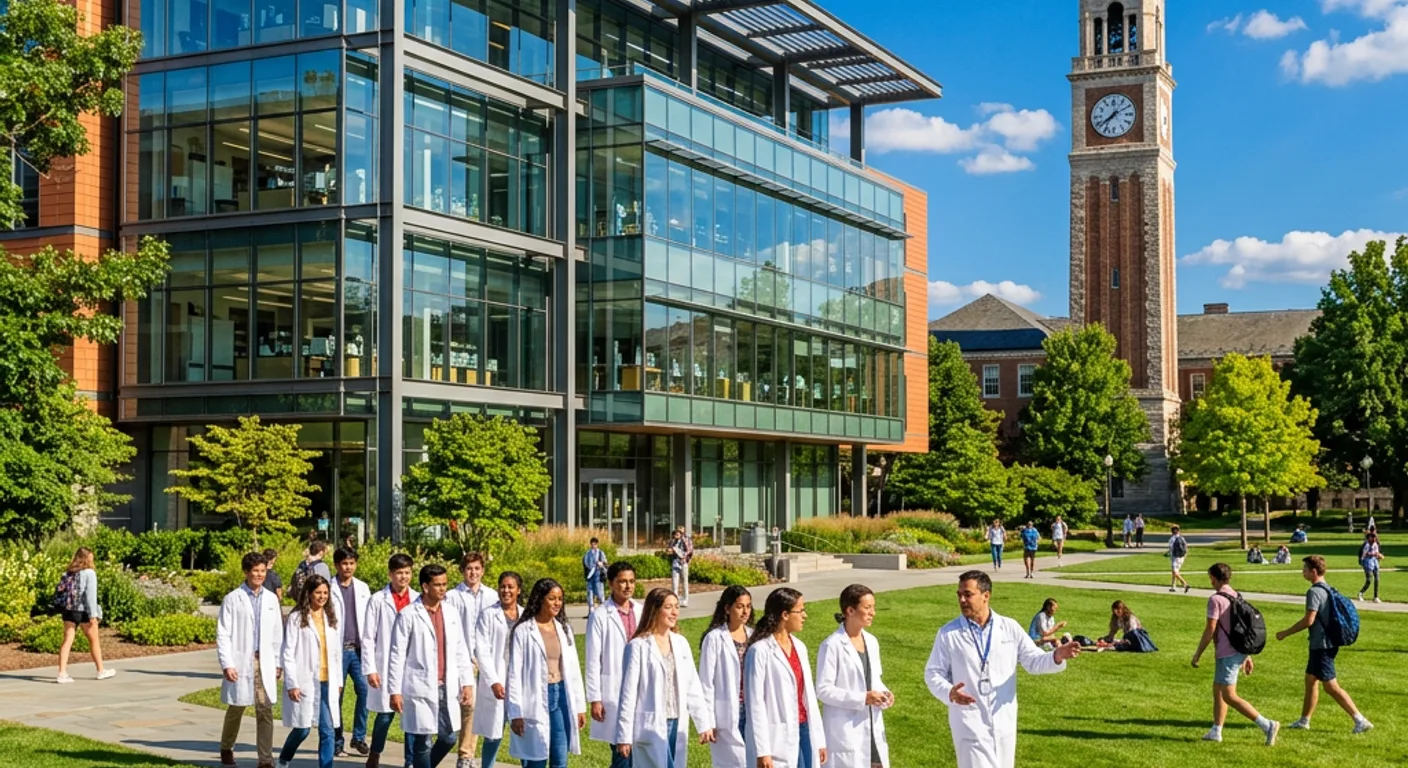
Pre-med isn't a major — it's a track, and where you run it matters. The same biology degree can lead to wildly different outcomes depending on whether your school hands you a lab bench freshman year or makes you fight for one as a junior, and whether the pre-health advising office actually knows your name. Prospective students searching for the best pre-med colleges are usually comparing rankings and acceptance-rate charts, but the numbers only tell part of the story. This list breaks down 10 schools that consistently produce strong medical school outcomes — and explains why the real answer to "is this the right pre-med school for me" comes from talking to a student who's actually living the workload. That's exactly what SchoolScoops private, student-led campus tours are built for: candid, one-on-one conversations with current students who can tell you what the pre-health office won't put in a brochure.
Why a Private Tour Goes Further for Pre-Med Families
- What the pre-health advising office actually does — versus what its website claims it does
- How early undergraduates realistically get into research labs, and whether that access requires connections or just persistence
- What the weed-out reputation of intro chemistry, organic chemistry, and physics actually feels like from the inside
- How clinical volunteering and shadowing opportunities work in practice, given the school's proximity to hospitals and clinics
- What GPA and MCAT culture looks like among peers — collaborative, cutthroat, or somewhere in between
- How committee letters are actually written, and what a school's real (not self-reported) acceptance rate tends to look like
- What students wish they'd known about balancing pre-med requirements with an actual college experience
1. Johns Hopkins University
Johns Hopkins sits blocks from Johns Hopkins Hospital, and that proximity shapes everything about the pre-med experience — research access, clinical shadowing, and a pre-professional advising apparatus built specifically around medicine. It's intense by design, and a current student can tell you whether that intensity motivates you or grinds you down. Learn more at Johns Hopkins University or explore the Johns Hopkins undergraduate admissions page.
2. Harvard University
Harvard's pre-med track benefits from Longwood Medical Area proximity, deep research funding, and a reputation that opens doors — but the reported acceptance rate reflects survivors of one of the most competitive advising filters in the country, not an easy path. A private guide can explain how that filtering actually works. Learn more at Harvard University and the Harvard College admissions site.
3. Stanford University
Stanford pairs elite biology and human biology programs with research funding most universities can't match, plus a quarter system that changes the pacing of pre-med coursework entirely. A current student can explain whether the quarter system's speed helps or hurts your MCAT prep timeline. Learn more at Stanford University or the Stanford undergraduate admission page.
4. Duke University
Duke's proximity to Duke University Hospital and its strong undergraduate research culture make it a consistent pre-med draw, and its trimester-free, flexible curriculum gives students real room to build a research portfolio alongside coursework. A guide can walk you through how competitive lab placements actually are. Learn more at Duke University and the Duke admissions page.
5. Northwestern University
Northwestern's connection to the Feinberg School of Medicine and Northwestern Memorial Hospital gives undergraduates real access to clinical settings in Chicago, and the school's smaller undergraduate population means closer relationships with pre-health advisors than you'll find at bigger research universities. Learn more at Northwestern University and the Northwestern admissions page.
6. University of Michigan
Michigan offers a rare combination for pre-med students: a massive research budget, direct ties to Michigan Medicine, and in-state tuition that makes the ROI math dramatically better than most private options on this list. A current student can explain how to stand out in a program this large. Learn more at University of Michigan and the Michigan admissions page.
7. Emory University
Emory's location next to Emory University Hospital and the CDC gives pre-med students clinical and public-health exposure that's hard to replicate elsewhere, and its Atlanta location adds a layer of community-clinic volunteering opportunities beyond the main hospital system. Learn more at Emory University and the Emory admission page.
8. Rice University
Rice's small size, low student-to-faculty ratio, and residential college system create one of the more collaborative pre-med cultures on this list — students consistently describe it as competitive against the material, not against each other. Its Houston location adds access to the Texas Medical Center, the largest medical complex in the world. Learn more at Rice University and the Rice admission page.
9. Brown University
Brown's open curriculum lets pre-med students build genuinely interdisciplinary paths — a notable share of students admitted to Brown's own Alpert Medical School major in the humanities or social sciences rather than biology. A current student can explain how the open curriculum actually works for meeting prerequisites. Learn more at Brown University and the Brown admission page.
10. UCLA
UCLA combines a massive research infrastructure, direct ties to UCLA Health, and California public-school tuition value for in-state students. Its size means pre-med students need to be proactive about carving out research and advising relationships rather than waiting for them to come to you. Learn more at UCLA and the UCLA admission page.
Questions to Ask on a Pre-Med Campus Tour
- How early can freshmen realistically get into a research lab, and what does that process actually look like?
- What's the real culture in intro chemistry and organic chemistry — collaborative or cutthroat?
- How accessible is the pre-health advising office, and how personalized is the guidance?
- What do clinical volunteering and shadowing opportunities actually look like near campus?
- How does the school's committee letter process work, and what's its actual track record?
- What do current pre-med students wish they'd known before choosing this school?
→ Ready to talk to a current pre-med student before you apply? Book a private, student-led campus tour through SchoolScoops and get the unfiltered version.
Why Families Choose SchoolScoops for Pre-Med Campus Visits
A pre-health office will tell you what its program offers. A current pre-med student will tell you what it's actually like to survive it — the 6am study groups, the lab you had to email five times to get into, the professor whose office hours actually help. Families booking a private pre-med campus tour through SchoolScoops consistently say that one honest conversation reshaped their entire shortlist, because the details that matter most for a pre-med student — advising quality, research access, peer culture — are exactly the details a 90-minute group tour is built to skip.
Choosing a pre-med school is a four-year commitment before the real commitment even begins. Rankings and acceptance rates are a starting point, not an answer. The only way to know whether a school's pre-med culture fits how you actually work is to hear it from someone living it right now. Book a private pre-med campus tour through SchoolScoops and get real answers before you commit four years and a mountain of prerequisites to the wrong fit.
→ Ready to book? Visit SchoolScoops.com or browse all available schools to find your guide. Learn more about how SchoolScoops works.